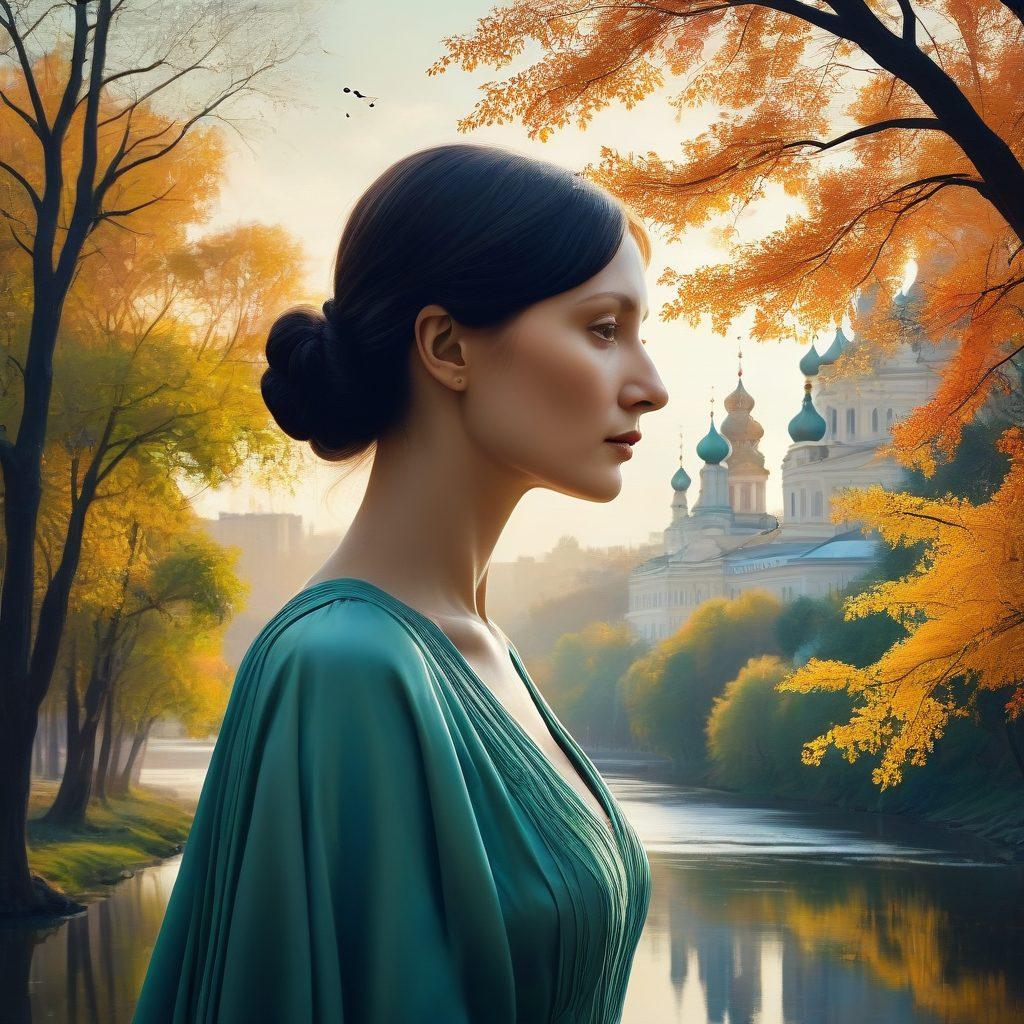
Exploring the Heart and Soul of Russian Poetry: A Deep Dive into Anna Akhmatova's Literary Legacy
In the vast tapestry of Russian literature, few female writers have carved their names into the fabric as indelibly as Anna Akhmatova. Her poetry captures the essence of love, loss, and the indomitable spirit of a woman navigating the tumultuous waters of her time. As we embark on this literary blog journey, let's uncover the rich textures of her work, revealing how this remarkable wordsmith became the voice of a generation, and how her poetic forms and artistic expression have left an indelible mark on modern poetry.
Akhmatova was not just a female poet; she was a revolutionary—a beacon of hope in a world rife with despair. She once said, "All the same, there is something important that I must tell you about my past." Can we consider this a call to explore the hidden dimensions of her life that shaped her poetry? Through her lens, we delve into themes of personal sacrifice versus societal expectations, unveiling how her experiences of war, love, and heartbreak are weaved into the fabric of Russian poetry. Literary criticism surrounding her works often amplifies a question: How does Akhmatova reflect the female struggle while also tapping into broader cultural influences?
A true reflection of her times, Akhmatova's poetry analysis reveals the nuanced interplay of public and private life. The turmoil of the early 20th century in Russia shaped her identity and perspective as a writer. Her self-imposed exile from the literary scene shows the complexities of being a female writer amidst a patriarchal narrative. Daring to express vulnerability, Akhmatova boldly intertwined her life experiences with the collective fears and hopes of her contemporaries. Were her words merely an artistic literature endeavor, or did they serve as a fortifying fern in a perilous forest?
As we explore Akhmatova's literary legacy, we dive into the various poetic movements she embodied and influenced. With every line, she reinvigorated classic literary themes, pushing the boundaries of poetic forms to create a fresh artistic expression that still resonates today. Can her work be regarded as a bridge between classical literature and modern poetry? When we engage with her powerful verses, we learn that the feminine voice in Russian literature is not just a whisper; rather, it is a clarion call to identity, belonging, and the unyielding quest for understanding—an exploration of the soul's deepest desires and fears.
In understanding Akhmatova's poetic prowess, we recognize the immense cultural heritage she left behind. Her words serve as a touchstone for female writers everywhere, inspiring them to break free from conventions and immerse themselves in creative writing that reflects their truth. The legacy of Anna Akhmatova awakens a question within us all: How can we, as future wordsmiths, honor her influence while forging our path through the realms of artistic expression? Let's celebrate her voice and legacy as we continue to explore the depth of female strength in literature, displaying how Akhmatova remains a guiding star within the cosmos of Russian poetry.
The Poetic Craftsmanship of Anna Akhmatova: Analyzing Her Influence on Modern Poetry
Anna Akhmatova stands as a towering figure in the realm of Russian poetry, captivating readers with her profound emotional depth and masterful craftsmanship. As we unravel the intricacies of her poetic genius, we'll find that her influence has shaped not just her contemporaries but has left an indelible mark on modern poetry as we know it today. What is it about Akhmatova’s work that makes it resonate so deeply with both her own generation and those that followed? In this exploration, we delve into the rich tapestry of her artistic expression and its relevance in our modern world.
Akhmatova was not just a female poet in a male-dominated literary landscape; she was a revolutionary force. Through her poetry, she weaved the complexities of the human experience, intricately connecting personal struggles with broader societal issues. Her distinctive voice became a beacon for other female writers, embodying resilience in the face of oppression. How did her relentless pursuit and creation of innovative poetic forms lead to a reclaiming of space for women in literature? It is through digging deeper into her life, her influences, and her voice that we begin to understand her cultural significance.
In a society riddled with turmoil, Akhmatova's poetic craftsmanship is born out of conflict. Her works exude a haunting beauty that addresses themes of love, loss, and longing. In her famous poem "Requiem," she explores the anguish of separation and the effects of political persecution—a reflection of her personal tragedies amid the oppressive Soviet regime. This blend of the personal and political is a hallmark of her poetry and serves as a poignant reminder of the struggles faced by both individuals and communities. As literary analysts and fans of artistic literature, we are left wondering: Can poetry heal the wounds inflicted by societal upheaval?
Akhmatova's innovative use of language demonstrates the power of a wordsmith. Her ability to manipulate structure, rhythm, and imagery paved the way for new poetic movements. Have you ever noticed how certain phrases, in their simplicity, can evoke such profound emotions? Akhmatova had the extraordinary talent to conjure vivid imagery through sparse language, illustrating that sometimes less really is more. This is an essential lesson for aspiring poets and creative writers alike: to capture the essence of emotion without overwhelming the reader. Indeed, her legacy beckons modern poets to explore and push the boundaries of their own craftsmanship.
As we analyze Anna Akhmatova's literary legacy and her influence on modern poetry, we also recognize her role as a cultural touchstone in the broader narrative of Russian literature. Akhmatova’s works transcend her time, bridging classical literature with contemporary themes, inviting both literary criticism and admiration from scholars around the globe. Her poetry serves as a reflection on artistic expression through the lens of female experiences, signaling a shift in how we view female writers and their place within the literary heritage. So, what does it mean to be inspired by such a powerful figure? It is an invitation to not only engage with her work but to incorporate her passion, vulnerability, and fearlessness into our own creative journeys.
From Classical Roots to Modern Movements: The Enduring Legacy of Akhmatova's Work
Anna Akhmatova, a name that resonates with the echo of Russian poetry, embodies the convergence of classical roots and modern movements. Her journey through the tumultuous landscape of 20th-century Russia has left an indelible mark on the world of literary arts. How did this female poet transform the conventions of poetic forms, crafting her own unique voice amid societal upheaval? In this blog, we’ll unravel the rich tapestry of Akhmatova's work and explore the enduring legacy she has bequeathed to us as we embrace her profound artistic expression.
Akhmatova’s journey began within the confines of classical literature, where she drew inspiration from the giants of the past. Her poetry analysis reveals how these influences shaped her writing style and thematic choices. Have you ever grappled with the weight of cultural heritage while trying to find your own voice? Akhmatova faced similar trials, reflecting the struggles of countless female writers trying to establish their identity in a male-dominated literary world. Through her poignant verses, she transforms personal pain and political turmoil into universal themes that resonate with readers across generations.
In the realm of modern poetry, Akhmatova stands as a beacon for creative writing. Her innovative approaches not only challenged the poetic movements of her time but also paved the way for subsequent generations of Russian writers. ”Without a spec of self-pity,” she wrote, encapsulating the essence of resilience that permeates her work. The emotional depth and unfiltered vulnerability found in Anna Akhmatova poetry serve as a bridge connecting the past to the present, ensuring that her artistic literature continues to inspire even in today’s fast-paced world.
As we delve deeper into Akhmatova's literary criticism, we must ask: how does her work reflect the struggles and triumphs of female poets throughout history? She encapsulates the voice of a generation, but also breaks barriers for others to follow. Her experience as a woman navigating the churning waters of political oppression and personal loss enabled her to craft verses that speak to the heart of humanity. Engaging with Akhmatova's poetry can be a reflection of our own desires, fears, and hopes—proving that her words are not just relics of a bygone era, but living fragments of our collective consciousness.
With each word penned down, Akhmatova challenges us to consider the cultural influence of her legacy. She stands within the epicenter of artistic expression, pushing the boundaries of what it means to be a poet. Whether you are a seasoned literature aficionado or just embarking on your journey into Russian poetry, we invite you to explore Akhmatova's work with an open heart. What can her words teach us about embracing our own narratives? As we learn from this remarkable female poet's life and legacy, let us celebrate the beauty of poetic forms that can unite us, provoke thought, and inspire generations to come.